Genomic Landscapes of Chinese Hamster Ovary Cell Lines and Cricetulus griseus
Chinese hamster ovary (CHO) cells are the preferred production hosts for biopharmaceuticals, widely used for the development of therapeutic proteins, antibodies, and hormones. However, the genetic heterogeneity among CHO cell lines has posed challenges for systematic study and engineering. In our latest study, published in Nature Biotechnology, we present a 2.4-Gb draft genome assembly of the Chinese hamster (Cricetulus griseus), alongside comparative analyses of six CHO cell lines. This research provides a unifying genomic reference for CHO-based bioprocessing and highlights key mutational differences affecting cellular function and protein production.
Key Findings
- Chinese Hamster Genome Assembly and Annotation:
- We assembled a high-quality 2.4-Gb reference genome, identifying 24,044 genes, which serve as a baseline for CHO studies.
- Optical mapping and transcriptome sequencing confirmed high sequence accuracy, improving gene annotations and regulatory element identification.
- Comparative Genomics Across CHO Cell Lines:
- Resequencing of six CHO cell lines uncovered >3.7 million SNPs, 551,240 small insertions/deletions (indels), and 7,063 copy number variations (CNVs).
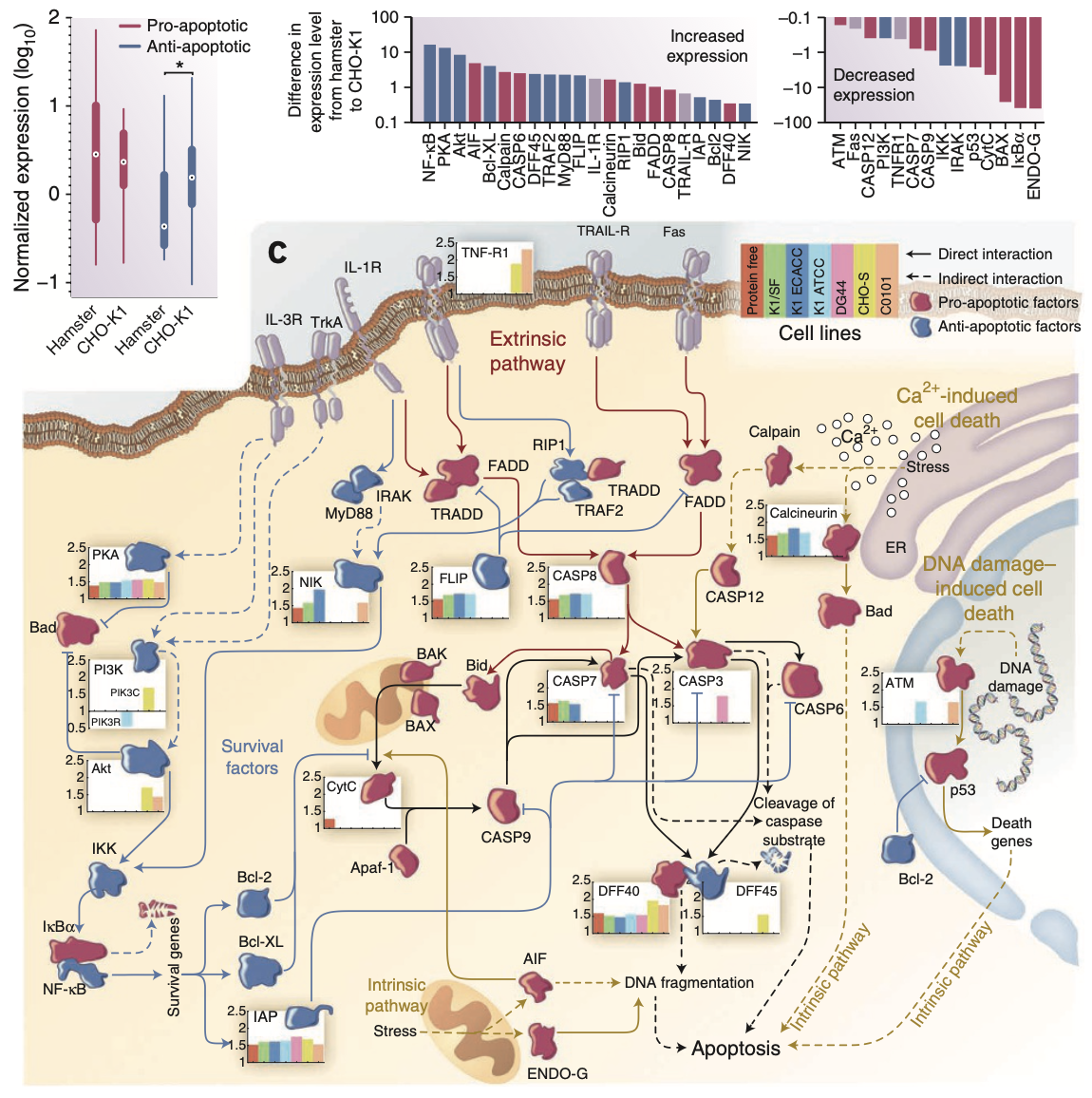
- Several functional gene deletions were detected, including in apoptosis-regulating genes, which influence cell survival during bioprocessing.
- Metabolic Pathways and Genetic Adaptations for Biopharmaceutical Production:
- We identified key glycosylation pathway genes, essential for therapeutic protein stability and activity, providing insights into CHO cell line engineering.
- Apoptosis-related gene expression shifts were observed, with anti-apoptotic pathways significantly upregulated in CHO cells, supporting high-density cell culture viability.
Reflections
This project was carried out in collaboration with UC San Diego, focusing on genome assembly and comparative analysis between Chinese hamster and CHO cell lines. Our research partners are experts in biopharmaceutical engineering, with deep expertise in drug-related genes and pathways. The metabolic pathway figures in this paper are particularly striking, visually illustrating key biochemical interactions critical to CHO-based therapeutic production.
The full text of this study can be accessed online at Nature Biotechnology.