Chromosome-Level Genome Assembly of Black Rockfish Provides Insights into the Evolution of Live Birth
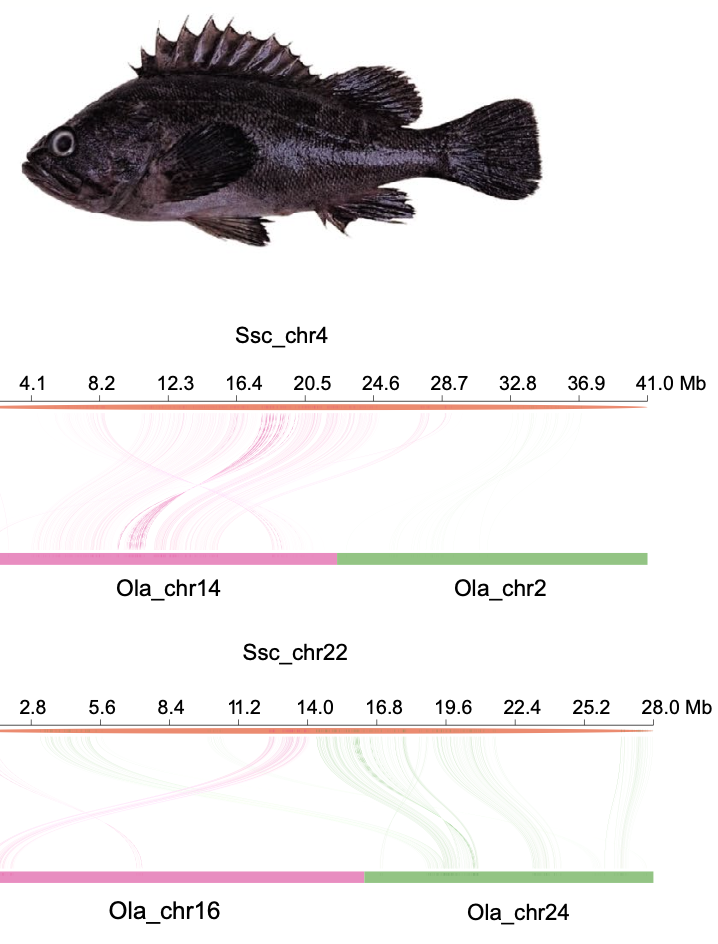
The black rockfish (Sebastes schlegelii) is a teleost species that exhibits viviparity, a reproductive strategy in which eggs are fertilized internally and retained within the maternal reproductive system until live birth occurs. Unlike most teleosts that lay eggs externally, black rockfish undergo internal fertilization, sperm storage, and extended embryonic development. In our latest study, published in Molecular Ecology Resources, we present a chromosome-level genome assembly of black rockfish, providing critical insights into the genetic mechanisms underlying viviparity and reproductive adaptation in nonmammalian vertebrates.
Key Findings
-
High-Quality Genome Assembly:
We successfully assembled the black rockfish genome using PacBio long-read sequencing and Hi-C scaffolding, achieving a contig N50 of 3.85 Mb and anchoring 99.86% of sequences onto 24 chromosomes. -
Genomic Basis of Sperm Storage and Release:
Through transcriptomic and ATAC-seq analyses, we identified zona pellucida (ZP) proteins, which play a crucial role in retaining sperm at the oocyte envelope until fertilization occurs. Additionally, we discovered astacin metalloproteinase subfamilies, which facilitate sperm release and embryo hatching. -
Maternal Preparation for Embryonic Development:
Our analysis revealed genes associated with vascularization, blood vessel formation, neuroglobin expression, and calcium-sensing receptors, suggesting that the ovarian wall of black rockfish functions similarly to the mammalian uterus, supporting embryo implantation and growth. -
Evolutionary Insights into Viviparity:
Comparative genomic analysis showed that black rockfish diverged from its egg-laying relatives approximately 84.9 million years ago, providing evolutionary context for the emergence of viviparity in teleost fishes.
The full text of this study can be accessed online at Molecular Ecology Resources.