Chromosome-Level Genome Assembly of Sperm Whale: Insights into Marine Mammal Evolution
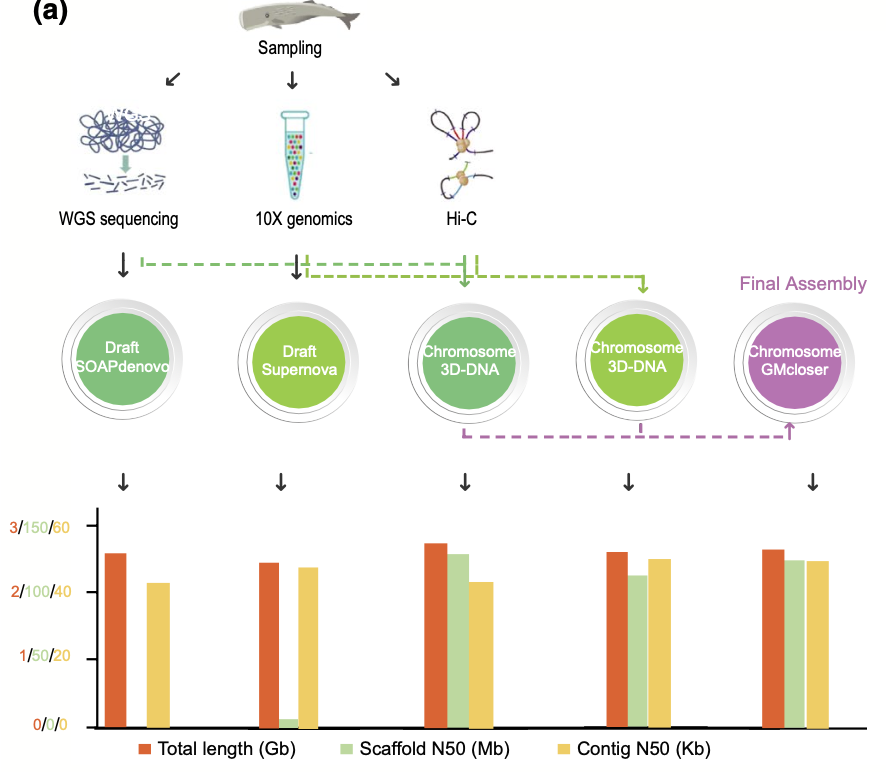
Marine mammals offer unique evolutionary models, demonstrating adaptations to aquatic environments through physiological and genetic modifications. Among them, the sperm whale (Physeter macrocephalus), one of the deepest-diving marine mammals, has fascinated scientists with its extreme physiological capabilities. In our latest study, published in Molecular Ecology Resources, we present the first chromosome-level genome assembly of sperm whale, leveraging data generated from our high-throughput sequencing platform BGISEQ-500 to investigate chromosomal evolution, repeat content, gene family dynamics, and genetic adaptations in marine environments.
Key Findings
- High-Quality Chromosome-Level Genome Assembly:
- We successfully assembled the sperm whale genome using BGISEQ-500 sequencing, 10X Genomics, and Hi-C scaffolding, achieving a scaffold N50 of 121.90 Mb, with 94.34% of sequences anchored onto 21 chromosomes.
- Comparative analysis demonstrated high genome continuity, aligning 99.29% of the Gulf of Mexico sperm whale assembly to our reference genome, resolving gaps and repetitive regions more effectively.
- Chromosome Evolution and Structural Rearrangements:
- By reconstructing ancestral chromosomes, we traced major interchromosomal rearrangements distinguishing sperm whales from terrestrial relatives such as cattle, detecting fission and fusion events unique to cetacean evolution.
- Gene expansions linked to hypoxia adaptation, oxygen conservation, and deep-diving capabilities were identified, shedding light on the genetic basis of sperm whale physiology.
- Marine Adaptation and Positive Selection:
- Functional enrichment analysis revealed positively selected genes (PSGs) involved in oxygen transport, stress resistance, and metabolic adaptations, highlighting genetic pathways supporting long-duration dives and extreme depth tolerances.
- The study confirmed gene family contractions in immune-related pathways, indicating unique pathogen resistance mechanisms adapted to marine environments.
Reflections
After launching our proprietary high-throughput sequencing platform, we aimed to showcase its capabilities by conducting genome sequencing and assembly on a representative species, much like our previous giant panda genome project. The sperm whale genome project embodies this effort, leveraging BGISEQ-500 data for assembly. Given that the sperm whale is a mammal, genome assembly was relatively successful, delivering high-resolution chromosome-level insights. However, compared to assemblies relying on long-read sequencing technologies, the results still have some limitations, which remain a challenge for future improvements in genome assembly strategies.
The full text of this study can be accessed online at Molecular Ecology Resources.