Chromosome-Level Genome Assembly and GWAS for Panax Notoginseng
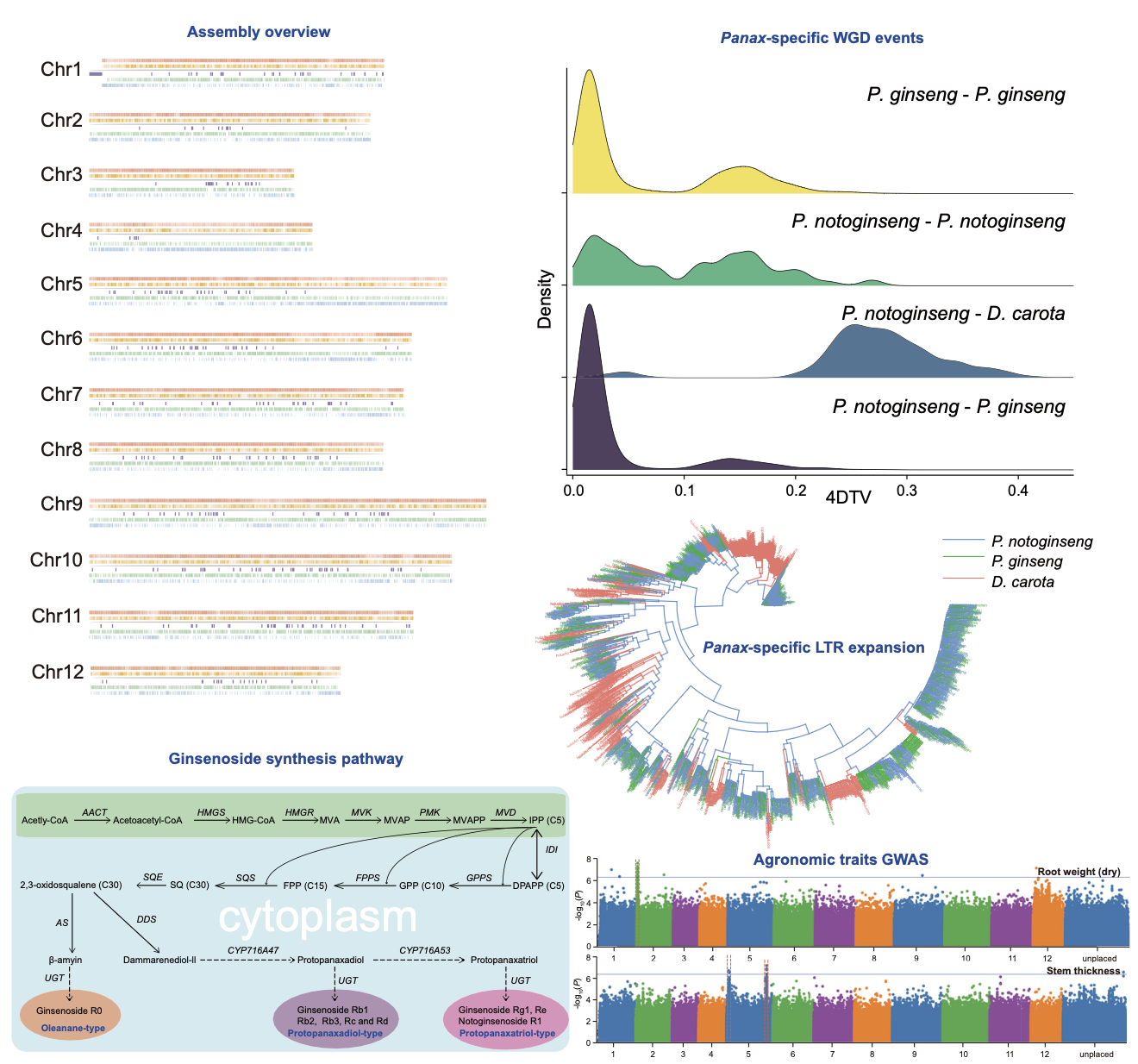
Panax notoginseng (P. notoginseng), a medicinal herb with significant economic and therapeutic value, has long been studied for its active compounds, particularly ginsenosides, which provide numerous pharmacological benefits. In our latest study, published in iScience, we present a chromosome-level genome assembly of P. notoginseng, offering critical insights into genome evolution, ginsenoside biosynthesis, and agronomic trait associations.
Key Findings
-
High-Quality Genome Assembly:
Using Nanopore, PacBio, and Hi-C sequencing, we generated a 2.24 Gb genome assembly, achieving superior contiguity compared to previous assemblies.
This assembly anchors 88.89% of sequences onto 12 chromosomes, significantly improving reference genome accuracy for genetic studies. -
Panax-Specific Whole-Genome Duplications (WGDs):
Comparative analysis with Panax ginseng and Daucus carota revealed that two lineage-specific WGDs contributed to genome expansion, alongside transposable element (TE) proliferation. -
Ginsenoside Biosynthesis Pathway Genes Identified:
We annotated key genes involved in ginsenoside production, including CYP716 and UGT genes, which play a role in the biosynthetic pathway. -
Genome-Wide Association Study (GWAS) for Agronomic Traits:
- 63 genes associated with dry root weight
- 168 genes linked to stem thickness
- Several candidate genes potentially contributing to disease resistance
These findings provide valuable genetic markers for breeding programs aimed at improving medicinal plant yield and resilience.
Reflections
Guangyi Fan is an invaluable member of our team, now leading marine genomics research at BGI-Qingdao. Before transitioning into this field, his primary focus was plant genomics, contributing to a range of genome assembly projects.
An opportunity arose when we connected with Professor Simon Lee at the University of Macau, leading to a collaborative research initiative that extended beyond genomic studies into talent development. Thanks to Guangyi’s efficient coordination, we successfully secured research funding, launched scientific projects, and strengthened training programs.
The University of Macau’s Chinese medicine research is one of the most advanced in the country, making it the ideal partner for our Panax notoginseng genome project, which also served as part of Guangyi Fan’s doctoral research. Through this collaboration, we not only enhanced our understanding of ginsenoside biosynthesis but also bridged plant genomics with medical applications, underscoring the broader impact of genomic research in traditional medicine.
The full text of this study can be accessed online at iScience.