Chromosome-Level Genome Assembly of Indo-Pacific Humpback Dolphin
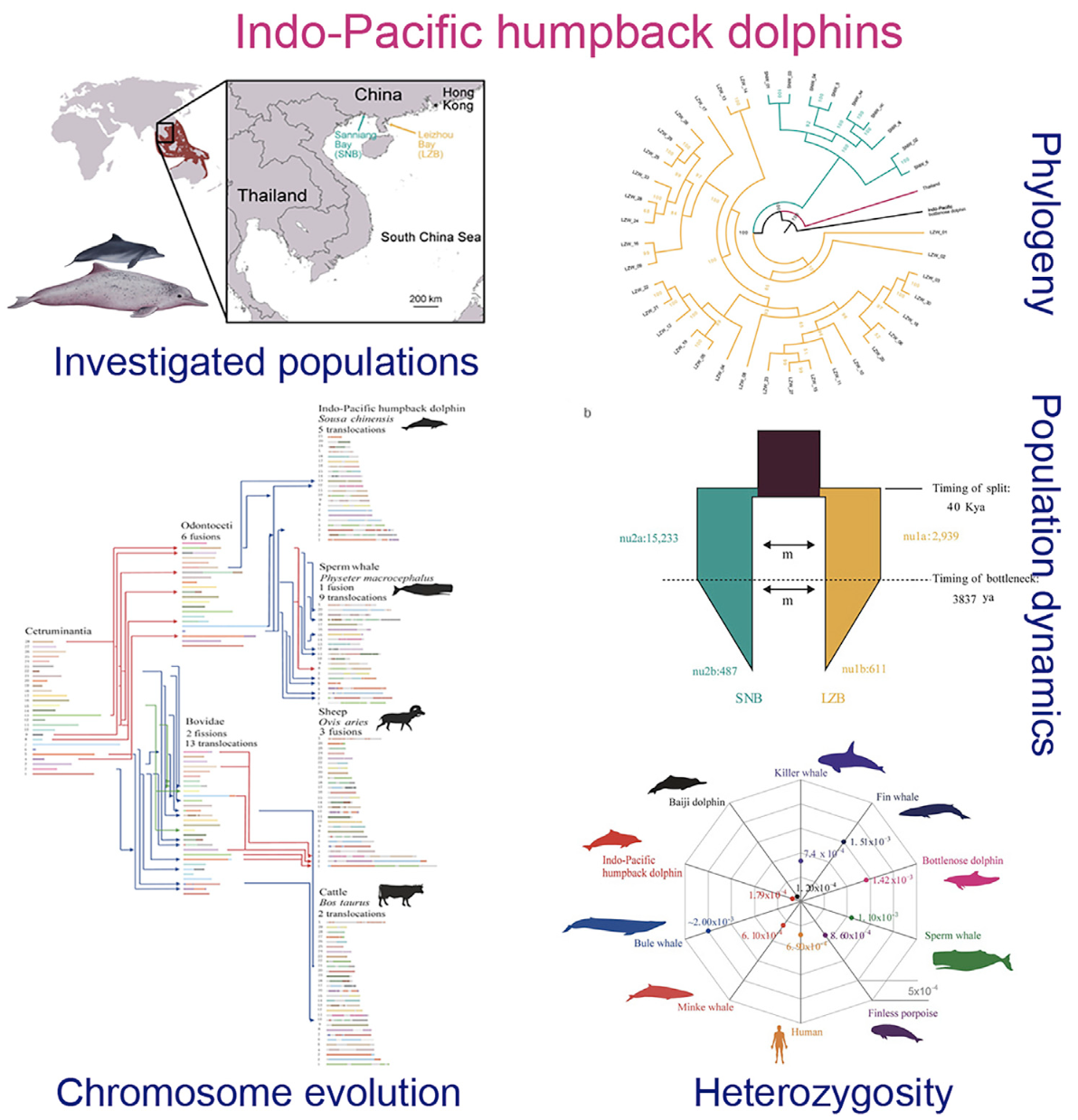
The Indo-Pacific humpback dolphin (Sousa chinensis) is a coastal cetacean species facing increasing threats due to habitat loss, pollution, and human activities. In our latest study, published in iScience, we present a chromosome-level genome assembly for the Indo-Pacific humpback dolphin, providing new insights into cetacean chromosome evolution and population genetics, supporting conservation efforts for this vulnerable species.
Key Findings
-
Chromosome Evolution and Structural Rearrangements:
By reconstructing the ancestral cetacean genome, we identified key chromosome reshuffling events, including fusions, translocations, and breakpoints, which influenced genes related to kidney filtration, body development, and immunity. -
Genetic Diversity and Population Structure:
Whole-genome resequencing of individuals from two neighboring populations in the South China Sea (Leizhou Bay and Sanniang Bay) revealed low genetic diversity and moderate population differentiation, alongside a severe bottleneck occurring ~4,000 years ago. -
Conservation Implications:
Effective population sizes have dramatically declined, emphasizing the high risk of extinction and the urgent need for conservation actions to prevent further genetic erosion.
Reflections
Since establishing XinLab’s Qingdao branch, marine genomics has become a central research focus. This study marks an important milestone in our efforts to apply genomics in marine species conservation, helping us understand the chromosomal evolution and population dynamics of Indo-Pacific humpback dolphins.
Collaborating with local and international research teams, we successfully integrated genome sequencing, comparative genomics, and ecological data to support conservation strategies. As habitat destruction and environmental changes increasingly threaten marine biodiversity, we hope our research can aid in developing informed conservation policies. Moving forward, we aim to continue expanding marine mammal genomics research, improving our understanding of cetacean evolution and conservation genetics.
The full text of this study can be accessed online at iScience.