Deciphering the Microbial Taxonomy and Functionality of Mangrove Ecosystems
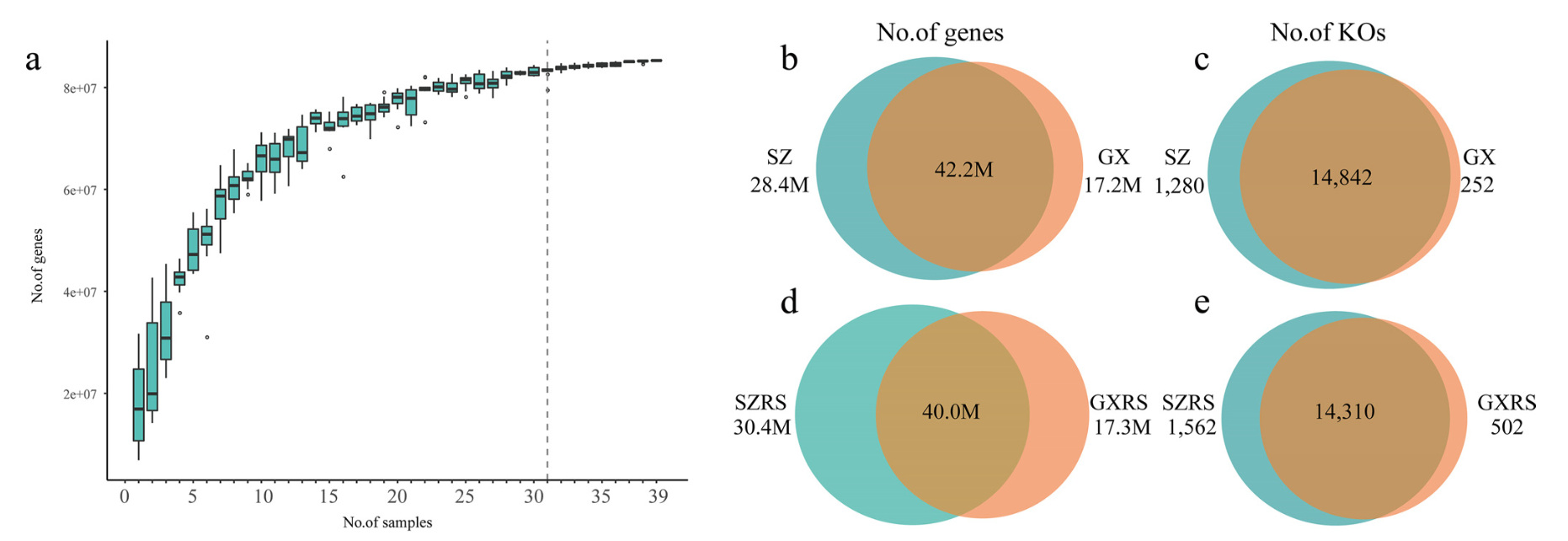
Mangrove ecosystems are unique coastal environments that support diverse microbial communities, playing a crucial role in nutrient cycling and environmental resilience. In our latest study, published in mSystems, we investigated the microbial taxonomic and functional shifts in two distinct mangrove ecosystems in southern China, uncovering their potential for bioactive compound production and antibiotic resistance.
Key Findings
- Microbial Diversity Across Pristine and Anthropogenic Mangroves:
Using deep shotgun metagenomic sequencing, we constructed a gene catalog of 87 million unique genes, revealing significant differences in microbial composition between pristine mangroves (Guangxi) and anthropogenic mangroves (Shenzhen).- Nitrospira and ammonia-oxidizing archaea were more abundant in Shenzhen mangroves, indicating enhanced nitrogen metabolism.
- Sulfate-reducing bacteria and methanogens dominated Guangxi mangroves, reflecting their role in sulfur metabolism and methane production.
-
Functional Genomics and Metabolic Pathways:
The functional analysis confirmed that Shenzhen mangrove microbiomes exhibited a higher abundance of nitrogen metabolism genes, while Guangxi mangroves showed a greater capacity for sulfur metabolism and methanogenesis. -
Discovery of Biosynthetic Gene Clusters (BGCs):
Hundreds of de novo reconstructed microbial genomes revealed novel biosynthetic potential, including three high-quality Acidobacteria genomes enriched with bioactive compound-producing gene clusters. - Antibiotic Resistance in Mangrove Microbiomes:
A total of 67,278 unique genes were annotated with antibiotic resistance functions, highlighting the prevalence of multidrug-resistant genes in mangrove microbial communities.
Reflections
This study comprehensively explores the taxonomy and functionality of mangrove microbiomes, shedding light on their biogeochemical roles and potential for bioactive compound discovery. The research was led by Shuilin Liao and Yayu Wang, with contributions from Xin Liu and collaborators at Xiamen University.
Mangrove ecosystems are often overlooked in microbial genomics, yet they harbor rich genetic resources with implications for environmental sustainability and biotechnology. By integrating metagenomics and functional analysis, we provide a valuable foundation for future studies on microbial adaptation, secondary metabolite biosynthesis, and antibiotic resistance in coastal environments.
The full text of this study can be accessed online at mSystems.